MPRCC


The Real Story Behind Marin’s Rising Homelessness Numbers—And Why MPRCC’s Wellness Center & Village Model is the Solution
The release of the 2026 Marin County Point-in-Time (PIT) Census and Survey Report confirmed what many of us working on the frontlines every day already know: homelessness in Marin County is not disappearing. In fact, total unhoused numbers have climbed from 1,090 in 2024 to 1,128 in 2026, with unsheltered homelessness rising from 788 to 831 individuals.
When looking closely at jurisdiction-level data from the report:
- Central Marin saw unsheltered homelessness climb from 325 in 2024 to 369 in 2026 (with San Rafael rising to 319).
- West Marin experienced a dramatic surge, with unsheltered numbers nearly tripling from 76 in 2024 to 212 in 2026 (including 63 in Bolinas and 138 across unincorporated West Marin).
- Meanwhile, while areas like Southern Marin recorded lower visible encampment counts due to sweeps and enforcement, the underlying regional need hasn't vanished—it has simply been displaced across county borders or pushed into remote rural corridors.
At Marin Peer Resource Community Collective (MPRCC), we believe in facing these facts with radical honesty, deep empathy, and evidence-based solutions.
Why are homelessness numbers rising in one of the wealthiest counties in America? What does scholarly research tell us about this crisis? And why is MPRCC’s peer-led Wellness Center & Village Model the definitive path forward?
1. Why Numbers Are Rising in Marin: What Scholarly Research Teaches Us
To solve a crisis, we must diagnose its root causes accurately rather than falling back on harmful myths. Academic research consistently highlights three structural drivers that explain Marin’s current trajectory:
A. Severe Housing Unaffordability & Wage Gaps
The fundamental driver of homelessness is not personal failure—it is severe housing unaffordability. In the landmark study by researchers at the University of California, San Francisco (UCSF), the California Statewide Study of People Experiencing Homelessness (CASPEH), scientists found that 90% of unhoused Californians lost their housing right here in California, and median household incomes prior to homelessness were far below local rent thresholds.
In Marin County, where rent prices rank among the highest in the nation, even minor economic shocks—a medical emergency, job loss, or rent increase—force vulnerable neighbors over the edge. Scholarly research by Greene & McCoskey (2015) confirms that local housing market tightness and high median rent directly correlate with elevated rates of Point-in-Time homelessness.
B. Displacement and Encampment Sweeps Push People Out
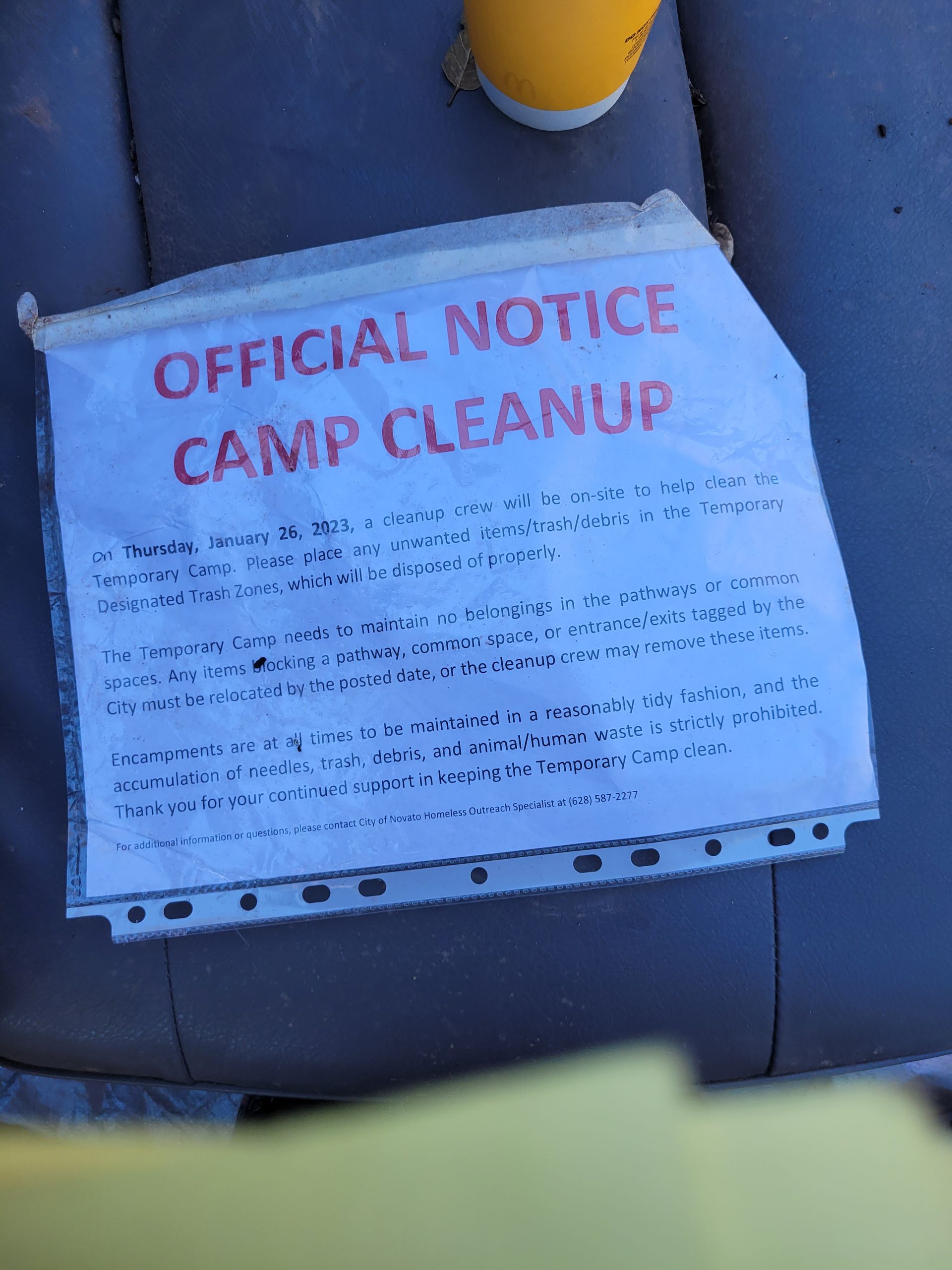
The 2026 PIT data shows a stark redistribution across regions: West Marin’s unsheltered count tripled (76 to 212). Decades of public health research on municipal encampment sweeps (such as findings published in the American Journal of Public Health) demonstrate that punitive enforcement and displacement do not reduce homelessness. Instead, sweeps scatter individuals into rural, unserviced pockets (like West Marin) where they are cut off from medical care, food distribution, and peer networks—making recovery and permanent housing placement dramatically harder.
C. Institutional Gaps & Trauma
Traditional institutional shelter care often imposes rigid, high-barrier requirements that inadvertently traumatize individuals who have already survived displacement and systemic neglect. Research in the Journal of Community Psychology demonstrates that high-barrier shelter models suffer from high rates of attrition, whereas low-barrier, community-rooted environments foster continuous engagement and long-term stability.
2. Why Traditional Models Fail—And Why MPRCC’s Wellness Village Model Works
Traditional responses treat homelessness purely as a transactional housing problem. But without community, dignity, trauma support, and peer navigation, housing stability quickly falters.
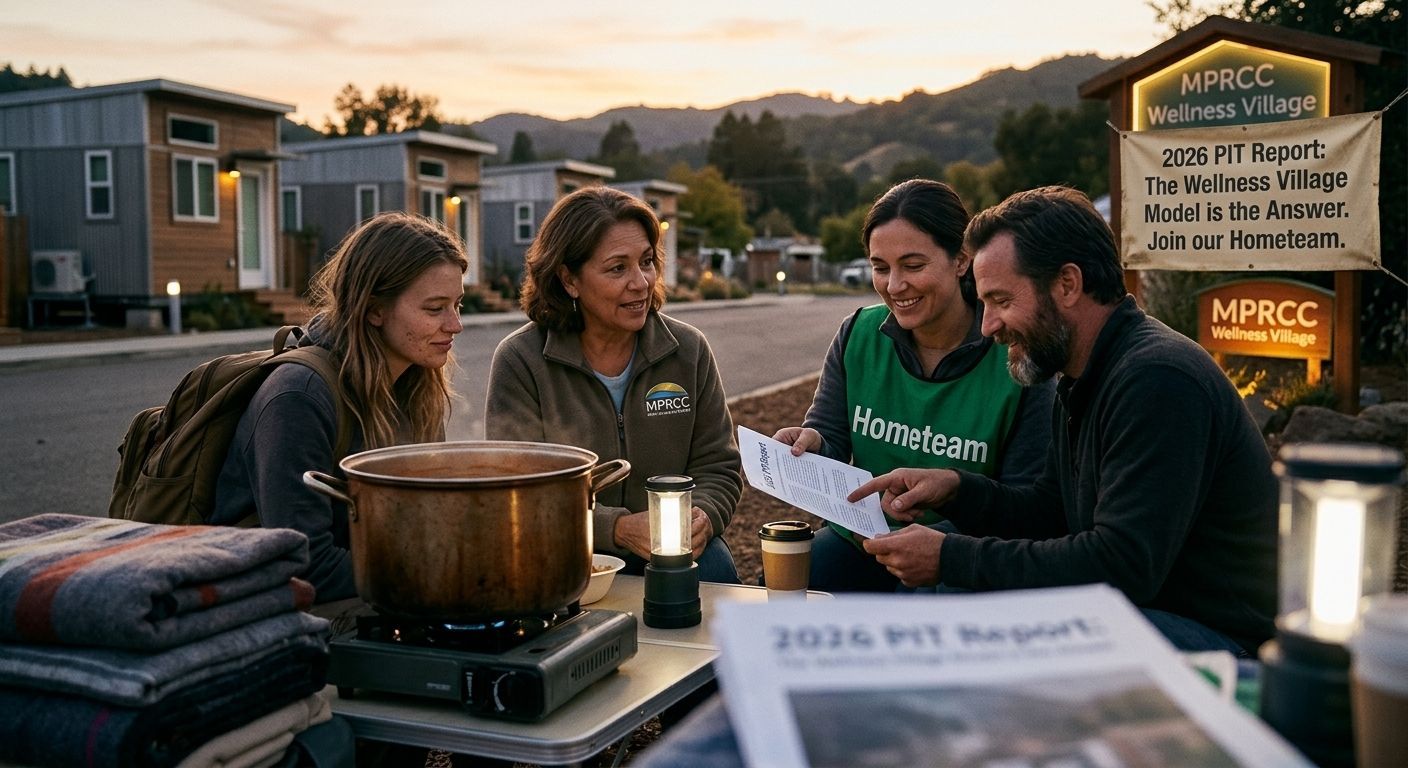
At MPRCC, we are actively advancing our long-term vision for a peer-led Wellness Campus and Workforce Housing Village. Here is why this model directly addresses the root causes identified in academic literature:
\
1. Peer-Led Support Delivers Proven Engagement
Scholarly studies published in Psychiatric Services and the American Journal of Preventive Medicine consistently show that Peer Support Specialists (individuals with lived experience of homelessness or recovery) achieve significantly higher rates of client trust, service retention, and long-term behavioral health outcomes compared to non-peer interventions. Because MPRCC was founded by individuals with lived experience (like Jenn Mallow and Bambi Klyse), our team breaks down mistrust and connects with neighbors who traditional systems leave behind.
2. Micro-Community & "Village" Architecture Restores Belonging
Research on intentional housing communities and tiny-home villages (such as studies from the University of Oregon and HUD Case Studies) highlights that micro-housing combined with communal wellness hubs dramatically reduces isolation and improves mental health outcomes. Our Village Model provides stable shelter, essential hygiene/laundry access, communal meals, and peer advocacy in a supportive, trauma-informed setting.
3. Integrated Health, Recovery, and Workforce Pathways
By combining peer advocacy with holistic wellness—addressing mental health, substance recovery (utilizing evidence-based harm reduction and Medication-Assisted Treatment partnerships), and practical workforce development—the MPRCC model ensures people don't just get off the street; they build self-sufficiency, stability, and lasting community roots.
3. Join the MPRCC "HomeTeam for Change"
We cannot wait for another Point-in-Time census to tell us the situation is urgent. True systemic change doesn't come from top-down mandates; it happens when a community stands up together.
That is why we are calling on YOU to join the MPRCC HomeTeam for Change.
How You Can Make an Impact Today:
- 🤝 Become a Sustaining Donor: Help us fund essential peer-led outreach, laundry/shower programs (like the Bethany MPRCC Project), emergency storm response, and the realization of our Peer-Led Wellness Campus & Workforce Housing Village.
- 🙋 Volunteer & Partner: Whether you bring skills in healthcare, trade skills, legal advocacy, or meal preparation, there is a seat for you at our table.
- 📢 Advocate for Lived-Experience Solutions: Stand with MPRCC at local town halls, city council meetings, and county policy steering committees to support low-barrier, human-centered housing models in Marin.
-
Ready to stand with your unhoused neighbors? Visit MPRCC.org today to join the HomeTeam for Change and build a safer, healthier, and more compassionate Marin County for everyone.
Data Source: 2026 Marin County Point in Time Census and Survey Report (Marin HHS)New Paragraph
MPRCC